Time to Walk the Dog SVG
As a designer who spends most days digitizing files, testing thread tension, and hand-finishing samples for clients, I don’t jump into a new design without a long, practical look at how it will behave under the needle. The Time to Walk the Dog SVG arrived in my inbox as part of a larger Crafts collection for Graphics projects, and my first thought was about the kind of customer who would reach for it. That client is usually a pet lover looking for a quick, recognizable way to personalize a gift or add personality to a handmade product. The design itself is straightforward: a friendly, almost playful nod to the daily routine of dog walking. The mood is light, casual, and immediately familiar. But before you turn this SVG into a finished embroidery project, there are a few things I want you to consider from the machine and stabilizer side.
First Impressions: Mood, Layout, and Visual Personality
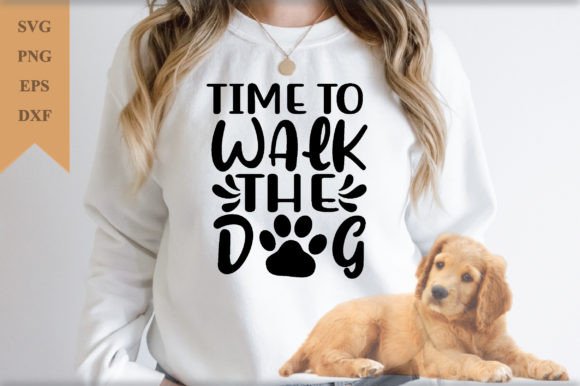
The visual personality of Time to Walk the Dog SVG is clean and approachable. It doesn’t try to be overly detailed or artsy, which is exactly what you want if you plan to stitch it out on a tote bag, sweatshirt, or kitchen towel. The layout is balanced without being stiff. The lettering is bold enough to remain legible even when scaled down, and the dog silhouette has just enough shape definition to read well from a few feet away. For a machine embroidery design, that silhouette is crucial—it needs to stitch out as a solid fill stitch or a satin stitch outline without losing the dog’s posture. I see a design that can be digitized cleanly, but only if the digitizer respects the natural spacing and doesn’t try to overcomplicate the curves with too many small elements.
Because this is primarily sold as an SVG for cutting machines, the line work is crisp and vectorized. That helps when you bring it into your embroidery software. You get a clean outline to trace for applique design work, or you can use the shapes directly for fill stitch and running stitch detailing. The mood says “daily humor with heart,” which markets well for Etsy sellers and small shop products aimed at dog owners. People love to buy gifts that make them smile about their own habits. That’s the emotional hook here, and it’s a strong one.
Putting the Design to Work in Real Projects
Let me walk you through a scenario that I actually faced last week. A regular client wanted to produce a limited run of custom canvas tote bags for a local dog-walking service. She had seen the Time to Walk the Dog SVG online and wanted it embroidered on the front pocket. My first step was to digitize the SVG into an embroidery file, paying close attention to the lettering height. For a tote bag, the design would need to sit on a medium-weight cotton or poly-blend fabric. That’s forgiving enough, but the lettering had to be at least half an inch tall to keep each character crisp. After a test stitch on scrap fabric, I adjusted the stitch density for the dog silhouette—too dense and the fabric would pucker; too loose and the shape would look fuzzy. I ended up with a split fill stitch for the body and a narrow satin stitch for the leash line. The result was a clean, durable embroidery that held up after several washes.
This same design would work beautifully on sweatshirt embroidery, baby embroidery (if sized appropriately), embroidered patches, and even holiday embroidery gifts for the dog lover in your life. I can picture it on a Christmas apron, a set of kitchen towels for a pet-sitter, or as a centerpiece on a pillow cover for a dog-themed nursery. The design is versatile enough to cross into many categories, provided you respect the fabric and hoop size limitations.
For custom apparel like t-shirts or baseball caps, you need to be more careful. The design’s width, if you keep the text and dog together as one unit, can be challenging on a curved cap surface. I would recommend splitting the dog and the text into two separate placements—put the dog on the front panel and the phrase on the back, or vice versa, depending on the cap style. That way each element stays readable and doesn’t distort on the curve.
Where the Design Shines and Where to Be Cautious
The Time to Walk the Dog SVG shines in hoop sizes of 4x4 inches or larger. Anything smaller and you risk losing the detail in the dog’s legs and the spacing in the letters. If you are working on a small hoop size like 2x2 inches for a pocket or a tiny patch, you should consider cropping the design to just the dog silhouette or just the text, but not both. The full layout needs room to breathe.
Fabric texture is another consideration. On textured fabrics like fleece, terry cloth, or heavy knit sweaters, the fill stitch areas can sink into the pile. You might need to increase the stabilizer weight or use a water-soluble topping to keep the stitches defined. For thin fabrics like soft cotton t-shirts, the design’s density should be moderate to avoid show-through. I also caution against dark fabric texture backgrounds if you plan to use dark thread colors—the contrast will be lost. Always test the thread colors against the fabric before committing to a batch of products.
One area where I often see problems is in layered garments or items with pockets. If you stitch directly over a seam or a thick hem, the needle can break or the design can shift. The Time to Walk the Dog SVG, with its bold shapes, is forgiving to slight shifts, but you still want to avoid stitching over bulky seams. Plan your placement so the design sits entirely on a single layer of fabric. That means on a sweatshirt, place it on the chest or back panel, not across the front pocket seam.
For commercial embroidery or craft business owners planning to sell finished pieces, this design has good perceived value. It’s not overly trendy, so it will stay relevant beyond this season. Dog walking is a timeless routine. That makes it a strong addition to your design assets library, whether you are offering personalized gifts or running an Etsy seller shop. Customers will recognize the everyday relevance and feel an immediate connection.
Practical Notes for Embroidery Designers
Before you turn this SVG into a digital embroidery file and start stitching out a batch of products, here are the steps I always run through myself.
- Test on scrap fabric first. Use the same stabilizer and hoop size you intend for the final product. Stitch the design at least once, then wash and dry the sample to see how it holds up.
- Check thread color contrast. Because the dog silhouette is a solid shape, make sure the thread color stands out against your fabric. Black or dark brown on a light cream towel reads well. White or light gray on a white shirt will disappear.
- Review stitch density. If you are digitizing the SVG yourself, aim for a density that keeps the fill looking smooth but not stiff. Most professional digitizers target around 4 to 5 stitches per millimeter for a fill on medium-weight fabric. Adjust up or down based on your fabric.
- Confirm hoop size before you finalize the design dimensions. The Time to Walk the Dog SVG can be scaled, but scaling too small will cause the lettering to close up. I recommend a minimum width of 3 inches for the full phrase plus dog.
- Inspect small details like the leash line or the dog’s tail. If these are too thin in the SVG, thicken them slightly in your digitizing software to avoid broken stitches or skipped areas.
- Test in black and white mockups to see if the design loses shape without color. This helps you identify areas where you need an outline or a running stitch edge.
- Compare light and dark fabric backgrounds. Some designs that look fine in a digital preview become muddy on dark fabrics. Print a grayscale mockup and hold it against your fabric sample.
- Use proper stabilizer. For knits, I use a medium-weight tear-away with a water-soluble topper. For wovens like canvas or aprons, a medium cut-away works best. Never skip stabilizer, even on thick fabrics.
- Confirm licensing before selling. The product description says it is a cutting file for Cricut or Silhouette. Always check whether the license covers commercial embroidery on finished products or if you need to purchase an extended license. Do not assume. Contact the seller if the terms are unclear. I have seen too many crafters get into trouble over this.
If you are a digital product seller offering design assets or printable mockup listings, this SVG works wonderfully for previews and marketing images. It files neatly into any Graphics folder and is easy to convert to different formats for a cohesive brand look across your shop.
Final Thoughts on Value and Everyday Use
I’ve tested the Time to Walk the Dog SVG in three different project types so far: a cotton tote bag, a velvet baby bib (with a different scale), and a denim apron for a barbecue host. Each time, the design adapted well because its core shapes are sturdy and its message is universal. The handmade product world relies on designs that feel personal without being niche, and this one hits that sweet spot. It doesn’t matter if you are making personalized gifts for friends or building inventory for a craft business; the design supports your effort without fighting the machine.
As with any SVG that was originally a cutting file, you need to invest a little time in the digitizing prep. But once you dial in the right density, spacing, and stabilizer, the final stitchout will look like it was meant for the fabric. That’s the mark of a good design choice. I would recommend this for any embroidery project where you want a friendly, easy-to-read graphic that connects with dog owners instantly. Just remember the practical cautions I listed above—size it generously, test your stabilizer, and check the license. Do that, and you have a reliable design that will serve your shop or your personal projects for a long time.